Many engineers expect an IMU to provide stable and accurate orientation outputs, yet in real-world systems attitude estimates often drift, oscillate, or behave unpredictably under dynamic motion. This disconnect usually originates from a misunderstanding of what inertial sensors are physically capable of measuring. Accelerometers sense specific force rather than orientation, while gyroscopes output angular velocity instead of absolute angle. When these signals are treated as direct angle measurements or fused without proper assumptions, estimation errors accumulate quickly. The fundamental issue is that orientation itself is not a directly observable quantity. It must be inferred through mathematical modeling, integration, and sensor fusion, making attitude estimation a problem of system design rather than sensor readout.
An IMU cannot measure angles directly because its sensors observe motion quantities, not orientation itself. Accelerometers measure specific force, gyroscopes measure angular velocity, and orientation must be inferred through integration and sensor fusion. Attitude is a state variable defined relative to a reference frame, making estimation—not direct measurement—fundamental to inertial navigation systems.
To understand why attitude must be computed rather than measured, it is necessary to examine the physical limits of inertial sensors and the mathematical nature of orientation itself. This explains why sensor fusion is unavoidable in practical IMU-based systems.
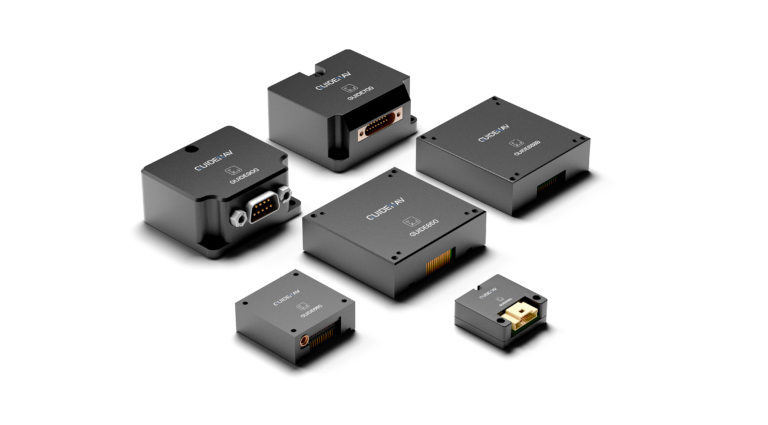
Table of contents
What an IMU Is Physically Capable of Measuring
An IMU is a tightly integrated set of inertial sensors arranged along orthogonal axes. In its standard configuration, it includes three accelerometers and three gyroscopes, while more advanced systems incorporate magnetometers to provide heading reference. Regardless of configuration, each sensor measures only a local physical effect acting on the sensor body.
From a measurement perspective, IMU observables are limited to forces and rotational rates. No sensor inside an IMU has intrinsic knowledge of global orientation or reference frames. This constraint is not a limitation of modern electronics or MEMS fabrication—it is fundamental to inertial sensing physics.
| Sensor Type | Observable Quantity | Cannot Directly Observe |
|---|---|---|
| Accelerometer | Specific force (m/s²) | Orientation or rotation |
| Gyroscope | Angular velocity (°/s, rad/s) | Absolute angle |
| Magnetometer | Local magnetic field vector | Disturbance-free heading |

Accelerometers: Gravity as a Conditional Orientation Reference
Accelerometers are often assumed to measure tilt directly, but this assumption only holds under restrictive conditions. In static or quasi-static environments, gravity dominates the accelerometer output, allowing roll and pitch to be inferred from the gravity vector’s projection onto the sensor axes.
Once dynamic motion is introduced, the accelerometer measures the vector sum of gravity and linear acceleration. At that point, gravity is no longer uniquely observable, and orientation derived from accelerometer data becomes ambiguous. This limitation explains why accelerometer-only attitude estimation fails in vehicles, UAVs, and robotic platforms undergoing continuous motion.
From an engineering standpoint, accelerometers provide:
- Absolute reference only when motion is limited
- No reliable orientation information under sustained dynamics
Gyroscopes: High Dynamic Fidelity with Inevitable Drift
Gyroscopes measure angular velocity, making them indispensable for capturing fast rotational dynamics. Unlike accelerometers, they are largely immune to linear acceleration, which allows smooth attitude propagation even during aggressive maneuvers.
However, angular velocity is not orientation. Obtaining angle requires time integration, and integration inevitably amplifies low-frequency errors. Even small bias or temperature-induced drift accumulates over time, causing orientation estimates to diverge from reality.
Key characteristics of gyroscope-based attitude propagation include:
- Excellent short-term stability
- High bandwidth dynamic response
- Long-term drift without external correction
This behavior is inherent to integration mathematics, not a flaw in filtering or firmware.

Orientation as a State Variable, Not a Measurement
At a deeper level, orientation cannot be directly measured because it is not a physical quantity like force or velocity. Orientation describes the geometric relationship between coordinate frames, making it a state variable rather than a sensor observable.
IMU sensors operate exclusively in the body frame. Without an external reference—such as gravity, magnetic field, GNSS, or vision—absolute orientation cannot be determined. Even when such references exist, they are partial and context-dependent, reinforcing the need for estimation rather than direct sensing.

Why Sensor Fusion Is Structurally Required
No single inertial sensor provides sufficient information to estimate orientation reliably under all conditions. Sensor fusion exists to compensate for fundamental observability gaps rather than to marginally improve accuracy.
| Sensor | Primary Contribution | Fundamental Limitation |
|---|---|---|
| Accelerometer | Absolute gravity reference | Invalid under motion |
| Gyroscope | Smooth dynamic propagation | Drift over time |
| Magnetometer | Heading constraint | Sensitive to interference |
Fusion algorithms—such as complementary filters and Kalman-based estimators—combine these inputs to maintain a bounded and observable attitude solution over time.
AHRS and the Practical Limits of Magnetic Heading
Incorporating magnetometers enables heading estimation relative to magnetic north, forming an AHRS. While effective in controlled environments, magnetic measurements are highly vulnerable to interference from ferromagnetic materials, electrical currents, and platform-specific disturbances.
As a result, professional navigation systems treat magnetometer data as conditional input. In many high-end applications, heading is ultimately stabilized using GNSS, vision-based systems, or known motion constraints rather than relying solely on magnetic measurements.

What IMU Attitude Outputs Actually Represent
When an IMU outputs Euler angles or quaternions, these values represent the current best estimate produced by an estimation model. They are not direct measurements. Their accuracy depends more on sensor stability, calibration quality, and algorithm design than on raw resolution specifications.
Understanding this distinction is critical when diagnosing drift, oscillation, or long-term instability in deployed systems.
Engineering Perspective: From Theory to Sensor Selection
In practical system design, the limitations described above directly influence IMU selection. Higher-grade gyroscopes with better bias stability reduce drift accumulation, while careful calibration and thermal control improve long-term attitude performance. This is why industrial, aerospace, and defense applications increasingly favor navigation-grade MEMS and FOG-based IMUs over consumer-grade solutions.
At GuideNav, IMU and INS designs are driven by this exact understanding of inertial observability. Rather than attempting to “measure angles,” GuideNav systems focus on minimizing bias instability, improving thermal robustness, and supporting high-quality sensor fusion—allowing attitude estimates to remain stable over extended operating periods and dynamic conditions.
For engineers working on UAVs, autonomous vehicles, stabilization platforms, or navigation systems, selecting an IMU is ultimately about managing uncertainty, not eliminating it. A clear understanding of why angles cannot be measured directly is the foundation for making that decision correctly.