GNSS outages are not exceptions in agricultural autonomy—they are daily realities. Tree canopies, steel barns, and orchard rows constantly break satellite visibility. Without a strong INS dead-reckoning strategy, even the most advanced autonomous tractor will drift, misalign rows, and lose operational safety.
INS dead-reckoning keeps agricultural robots on track when GNSS signals fail. With stable gyroscope bias, low drift, and sensor fusion using wheel odometry and gravity alignment, autonomous tractors can maintain row accuracy even under canopy, inside barns, or near metallic structures.
Agricultural robots rarely operate under consistent satellite visibility. Tree canopies, orchard rows, steel barns, and natural terrain frequently interrupt GNSS reception, while slow-speed motion makes heading estimates even less reliable. In these conditions, the navigation system must rely on INS-driven dead-reckoning to preserve path stability, control safety, and row-level precision. Achieving this requires understanding how drift evolves and how vibration, soil, and motion constraints influence inertial behavior during GNSS-denied intervals.
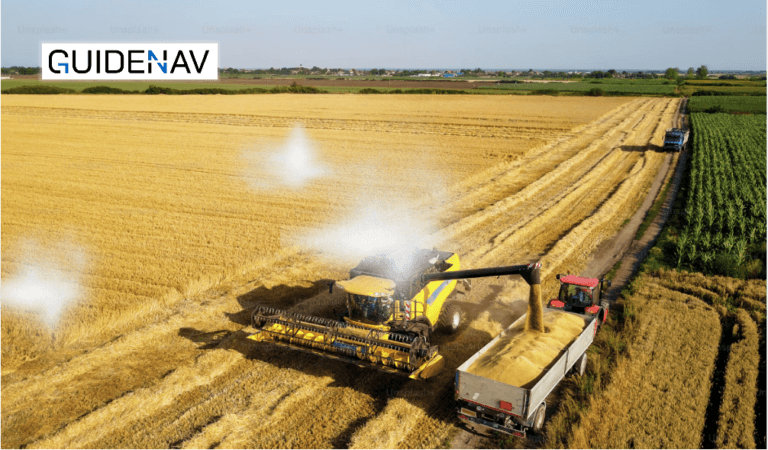
Table of contents
Why GNSS Outages Are Inevitable in Agriculture
Agricultural environments naturally disrupt satellite signals. Canopy density, metallic structures, and slow vehicle motion frequently break GNSS continuity, forcing INS agricultural robots to depend on dead-reckoning to maintain stable heading and path accuracy.
Typical GNSS outage scenarios
- Dense orchard canopies
- Vineyard trellis structures
- Tall tree lines
- Steel barns, silos, grain bins
- Shade houses and greenhouses
- Terrain masking on slopes or valleys
Why GNSS cannot be the primary truth source
GNSS suffers from:
- Noisy heading <3 km/h
- Sudden jumps in partial shading
- Slow reacquisition under canopy
- Multipath near metal structures
Agricultural autonomy must operate INS-first, GNSS-second.
INS Dead-Reckoning: What Happens When GNSS Drops
When GNSS drops, navigation relies solely on INS dead-reckoning. Accuracy now depends on gyroscope stability, accelerometer integrity, and how well INS agricultural robots resist drift under vibration, soil conditions, and slow motion.
Key drift drivers
- Gyroscope bias instability
- Accelerometer bias / scale factor error
- ARW/VRW noise
- Temperature variation
- Vibration & implement oscillation
- Installation misalignment
Drift Sources in Real Agricultural Conditions
Agricultural environments amplify drift because they combine slow motion, variable traction, vibration, and rapid temperature changes. These conditions directly influence inertial bias behavior and accelerate error growth during GNSS outages in INS for agricultural robots.
Slow-speed effects
Low-speed motion (<3 km/h) gives little kinematic leverage. Small yaw drift becomes visible lateral deviation, while soil slip weakens odometry corrections.
Vibration effects
Engine harmonics, hydraulic pumps, and soil-induced oscillations modulate gyro bias and inject nonlinear noise, reducing predictability during dead-reckoning.
Temperature effects
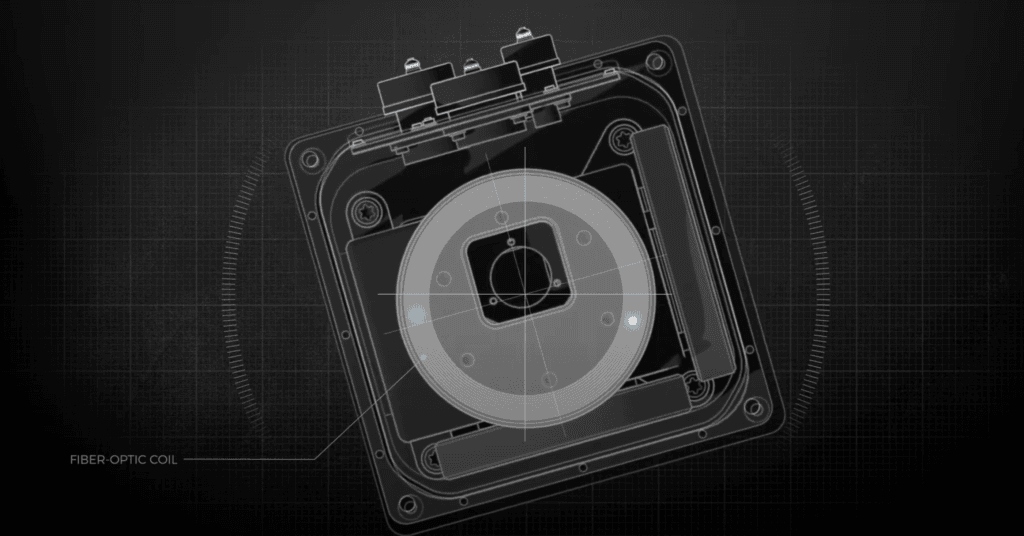
Transitioning between sunlight, orchard shade, and cabin heat creates bias shifts—especially in MEMS—while FOG remains more stable.
Typical symptoms
- Gradual yaw drift
- Attitude wobble
- Velocity mismatch
- Drift rising with cabin heat
Sensor Fusion Approaches That Support GNSS-Denied Operation
When GNSS quality drops, the fusion framework must reduce satellite influence and rely more on INS prediction. Adaptive covariance tuning prevents jumps, while bias freezing protects yaw stability. Gravity alignment stabilizes roll/pitch, and slip-aware odometry provides short-term velocity.
Non-holonomic constraints further suppress lateral drift during straight-line row following.
Fusion Mechanism Overview
| Mechanism | What It Does | Why It Helps During GNSS Outage |
|---|---|---|
| Adaptive Covariance | Lowers GNSS weight | Avoids false corrections |
| Bias Freezing | Locks bias updates | Stabilizes heading |
| Gravity Alignment | Stabilizes roll/pitch | Reduces attitude drift |
| Slip-Aware Odometry | Adjusts weighting | Helps INS agricultural robots maintain velocity stability |
| NHC Constraints | Limits lateral velocity | Suppresses drift |
| Confidence Decay | Smooth uncertainty growth | Keeps filter stable |
Wheel Odometry and Slip Behavior in Agricultural Fields
Wheel odometry offers short-term motion cues during GNSS outages, but traction conditions heavily affect accuracy. Soil softness, moisture, uneven loads, and sudden torque frequently cause slip, reducing odometry reliability in INS agricultural robots.
Typical Slip Conditions
| Condition | Odometry Effect | Notes |
|---|---|---|
| Soft/wet soil | Overestimated speed | High sinkage |
| Loose soil | Fluctuating traction | Speed instability |
| Heavy implements | Load-induced slip | Worse on slopes |
| Uneven terrain | Asymmetric speeds | Left/right mismatch |
| Torque changes | Slip spikes | Row entry or hill climb |
FOG vs. MEMS: Choosing an INS for Real Outage Durations
GNSS outages range from short transitions to long orchard-row shadowing. INS performance of agricultural robots must match these durations.
MEMS INS: for short outages
- Stable for 3–10 seconds
- Higher bias drift
- Sensitive to thermal/vibration
- Suitable for open fields
FOG INS: for long canopy shadowing
- Stable for 30–120+ seconds
- Lower ARW and bias drift
- Strong vibration & thermal resilience
- Required for deep-orchard autonomy
MEMS handles micro-outages; FOG handles navigation gaps.
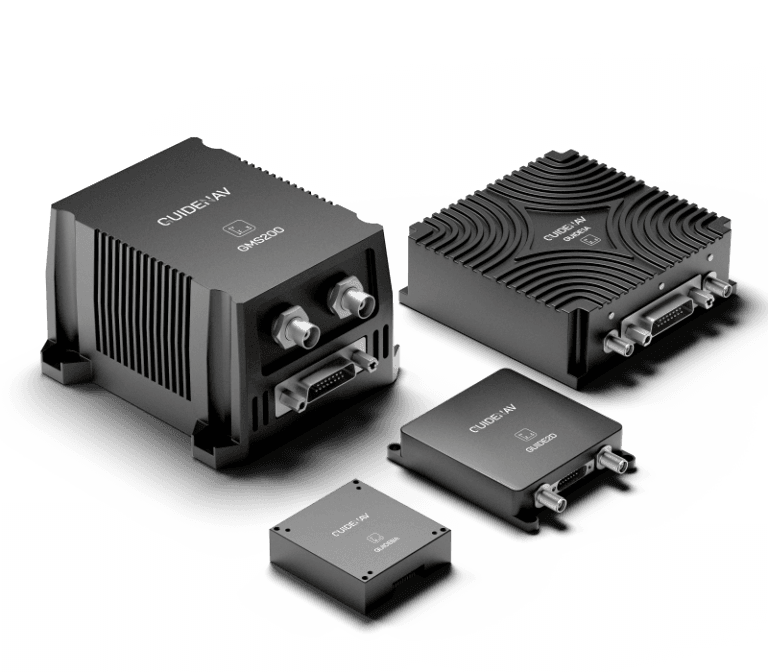
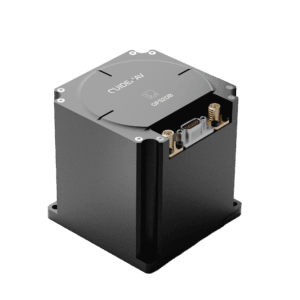
GuideNav provides IMUs built with strong thermal stability, carefully designed calibration workflows, and reliable compensation algorithms. Selecting a GuideNav IMU that matches your operational environment and accuracy needs ensures your system begins with a solid thermal foundation—minimizing IMU temperature drift and improving long-term reliability.
Field Testing GNSS-Outage Behavior
Testing must reflect real orchard and canopy conditions.
Three key stages
- Outage Induction– Natural GNSS loss (canopy, barns).
- Drift Observation– Heading + lateral deviation.
- Recovery Assessment– Smooth return when GNSS reappears.
Building a More Reliable Autonomy Stack
Reliable agricultural autonomy requires treating GNSS as an intermittent aid. Strong dead-reckoning relies on stable inertial sensors, well-tuned fusion logic, and predictable drift behavior across canopy, vibration, and low-speed conditions.
GuideNav focuses on developing INS agricultural robots solutions built around inertial stability and robust environmental performance, enabling R&D teams to maintain accuracy even when satellite visibility breaks down.